
What is the Google map pack?
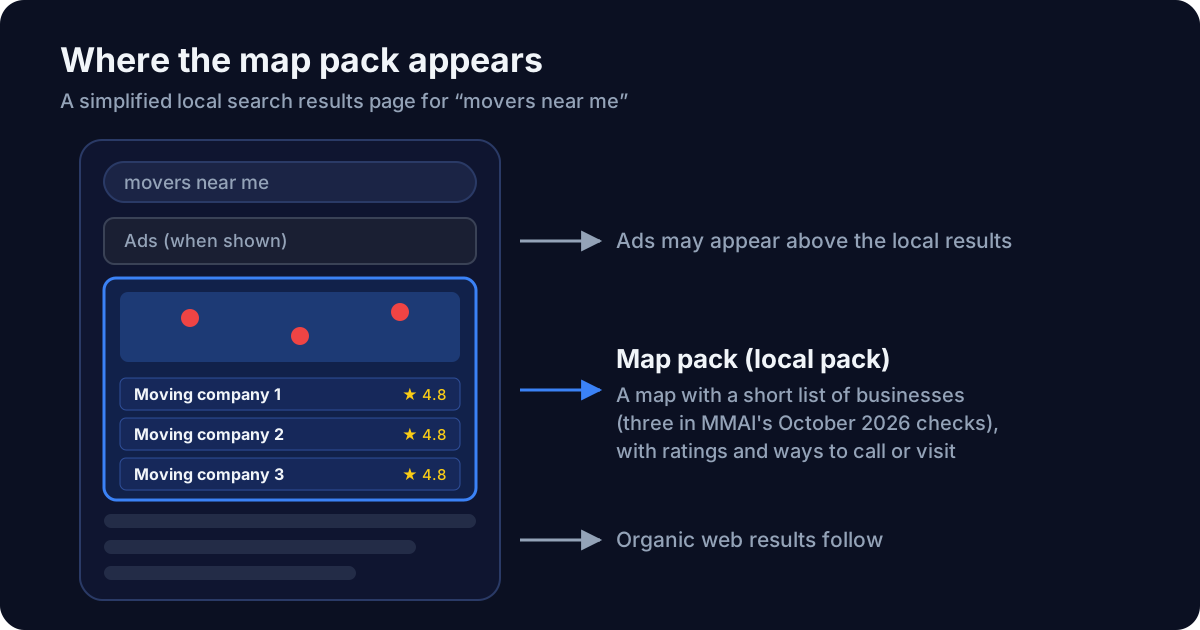
The map pack is the group of local business listings, shown with a map, that Google includes in the results when a search has local intent. Each listing draws on the business's Google Business Profile, such as its name, reviews, hours, and location or service area.
Google calls these "local results" and describes them this way: "When a customer searches for a business or place near their location, they'll find local results on Google Maps and Search." "Map pack" and "local pack" are industry names for the same results.
In an MMAI check on October 4, 2026, the local pack was the first block of results, above the organic links, for "movers near me" in Columbus, Ohio and Atlanta, Georgia on mobile and for "moving company" in Columbus on desktop. Each showed three businesses.
Why does the map pack matter to a moving company?
When the map pack sits above the organic results, as it did in the searches above, the few businesses in it are the first ones a customer sees. The listing shows the information a customer uses to compare movers, such as reviews and hours, before they visit any website.
The map pack is built from Google Business Profiles, and Google's ranking factors for it are about the profile, the business's location, and how well-known the business is. That's why the profile, its reviews, and its accuracy get so much attention in local search work.
Where does the information in a map pack listing come from?
Most of it comes from the Google Business Profile. Google says information in profiles "is compiled from a variety of sources":
- Crawled web content, such as information from the business's own website.
- Licensed data from third parties.
- Users who contribute facts, photos, and reviews, including the business owners who manage profiles.
- Google's own interactions with the business.
Customers can therefore see information the owner never added, such as photos uploaded by customers. Owners can review and edit their profile, and Google may also update it when other sources show the information has changed.
How does Google decide which businesses appear in the map pack?
Google says local results "are mainly based on relevance, distance, and popularity":
- Relevance: how well a Business Profile matches what someone searched for.
- Distance: how far each business is from the person searching. If the searcher doesn't share a location, Google uses what it knows about where they are.
- Prominence: how well-known a business is, based in part on "how many websites link to your business and how many reviews you have."
Google's help page summarizes the third factor as popularity and explains it under the heading "Prominence." Because distance depends on where the searcher is, the businesses in the map pack change from one part of a city to another.
The details, and what a moving company can influence, are in how Google ranks moving companies in Maps.
Can a business pay to appear in the map pack?
No. Google states: "There's no way to request or pay for a better local ranking on Google."
Paid placements are a separate product. Local Services Ads appear in their own unit in Google Search and charge per lead, and they don't change where a business ranks in the local results.
Do moving companies without a storefront appear in the map pack?
Yes. Many moving companies are service area businesses, which visit customers instead of serving them at an office. A service area business can appear in Google Maps and local results, and Google shows its service area instead of a street address. See what is a service area business.