
How does Google rank businesses in Maps?
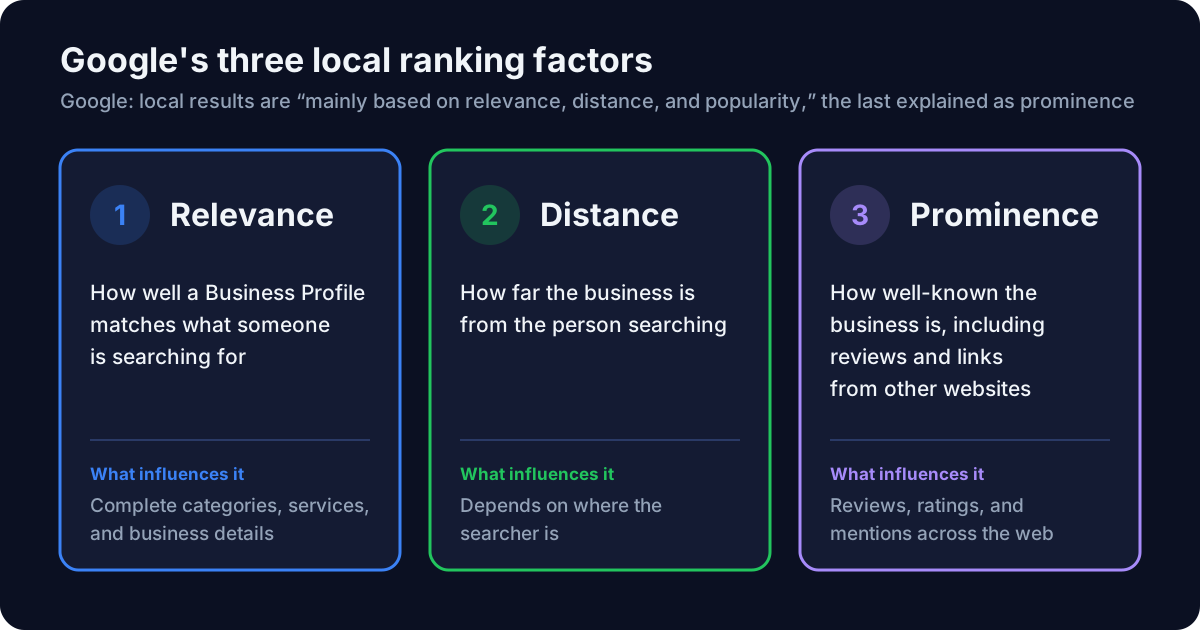
Google ranks local results mainly on three factors. Its help page says: "Local results are mainly based on relevance, distance, and popularity. Together, these factors help Google find the best match for customers' searches." The page explains the third factor under the heading "Prominence."
Google keeps the details private: "We do our best to keep the search algorithm details confidential to make the ranking system as fair as possible for everyone."
What is relevance?
Relevance is "how well a Business Profile matches what someone is searching for." For a moving company, that means the profile has to say clearly what the business does. Google's advice is to "provide complete and detailed business info," including:
- Categories: Google's guidelines say to use as few categories as possible to describe the core business, to choose specific ones, and not to use categories "solely as keywords."
- Business hours, including special hours.
- Address or service area, which must be accurate and precise.
- Attributes and other details that apply to the business.
Google also says it "can also detect category information from your website and from mentions about your business throughout the web," so a website that describes the moving services clearly supports the same signal.
What is distance?
Distance is "how far each business is from the customer who's searching." If the searcher doesn't share a location, Google uses what it knows about where they are.
Because distance is measured from the person searching, the same search can return different businesses in different parts of a city. Editing the profile doesn't change it.
What is prominence?
Prominence "means how well-known a business is." Google says it's "based on info like how many websites link to your business and how many reviews you have," and that "more reviews and positive ratings can help your business's local ranking."
Two inputs a moving company can work on follow from that:
- Reviews: a steady flow of genuine reviews from customers. See how to get more Google reviews.
- Links: other websites that link to the business. Google's spam policies treat buying links for ranking purposes as link spam, so these need to be earned.
MMAI's own observational snapshot of 320 large U.S. cities found that movers in the first Google Maps position averaged 381 reviews, against 125 for businesses in tenth position. The snapshot showed a correlation, not proof that reviews alone caused the higher rankings. The method is in the full study.
What can a moving company do to improve its Maps ranking?
Google lists these steps for improving local ranking:
- Verify the Business Profile. Google says verification "tells Google that you're authorized to represent the business, so it's more likely to show up in search results." See how Business Profile verification works.
- Keep information complete and accurate. "Businesses with complete and accurate info are more likely to show up in local search results."
- Respond to reviews. Google says replying "shows that you value their feedback."
- Add photos and videos that show the business and its work.
Google also compiles business information from websites, licensed third-party data, and users, so the name, address or service area, and phone number should match everywhere the business is listed. See what are local citations.
What doesn't improve a Maps ranking?
Some common tactics break Google's guidelines and can cost a business its profile:
- Paying for placement. Google says "there's no way to request or pay for a better local ranking on Google."
- Adding keywords or city names to the business name. Google says unnecessary information in the name "could result in the suspension of your Business Profile." See why Google Business Profiles get suspended.
- Extra profiles for the same business. Google allows one profile per location, or one service-area profile for a business without a storefront.
- Fake or incentivized reviews. Google removes them and may restrict the profile.
- Buying links. Google's spam policies treat buying or selling links for ranking purposes as link spam.
Does the website affect Maps rankings?
Google names the website as one source of the information in a profile, and links from other websites as part of prominence. It doesn't publish how much weight the website carries. A site that describes the business's services and service area clearly gives Google consistent information to match against searches.