
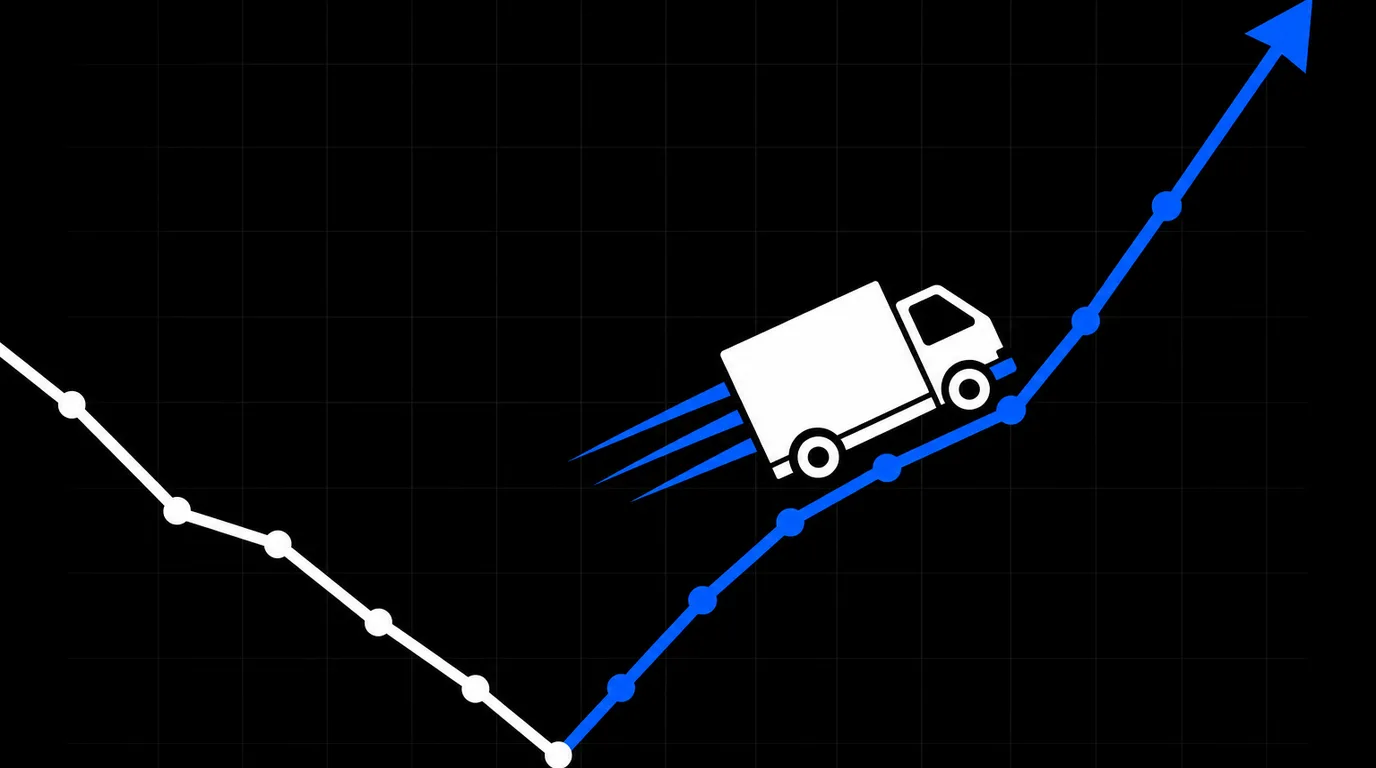

You build a batch of good links. You check your rankings a week later, and instead of going up, your page has dropped. So you do what any reasonable owner would do. You panic. You pull the links, you rewrite the page, or you buy more links to fix it.
And that reaction, according to a Google patent, might be exactly what Google wanted.
Here is the uncomfortable idea at the center of this post: Google does not always move your rankings in a straight line. Sometimes it moves them the wrong way on purpose, then watches what you do next. If this is the first time you are hearing that, it changes how you should think about every link building campaign from here on out.
Why Rankings Can Move the Wrong Way After Good Links
For years, people treated Google rankings like a vending machine. Put in links, get out rankings, see the result in a few days. That quick feedback loop was a spammer's best friend. If a trick worked, you did more of it. If it failed, you undid it. Trial and error, at scale.
Google filed a patent to break that loop. It is US8244722B1, titled "Ranking documents", granted on August 14, 2012, and invented by Ross Koningstein, a Google engineer. The patent describes something called a "rank transition function," a formula Google can place between the ranking your page has now and the ranking it will eventually settle at.
The patent also names the exact behavior it is targeting. It lists six "rank-modifying spamming techniques": keyword stuffing, invisible text, tiny text, page redirects, META tags stuffing, and link-based manipulation. The first five are old tricks that mostly died years ago. The sixth one is link building, and the patent names link farms as its example.
The Three Ranks Inside the Patent
The patent breaks a page's position into three numbers.
The old rank is where you were before anything changed. The target rank is where Google's math says you belong after your new signals, like those links, get counted. And in between sits the transition rank, where Google actually shows you while it moves from one to the other.
The wild part is in the patent's own language. The transition rank can vary "over time without any change in ranking factors associated with the document." Translation: your rankings can move on a day you did nothing at all.
The Dip: The "Initially-Inverse Response"
Here is where it gets strange, and it is the whole reason this matters.
The patent describes several shapes a transition can take. One is the damped response, where your rank slowly drifts up to where it belongs. The patent's example drawing shows this taking roughly 70 days.
Then there is the one that scares everyone. The patent calls it the "initially-inverse response transition function." After a positive change, like new links, your rank can go down first before it climbs. The patent's example shows it dropping for about 20 days, then rising to its target around day 70.
A site owner sees that first dip and assumes the campaign failed. But the dip might be the system working exactly as designed.
Why Google Watches How You React
This is the part most people miss. The transition function is not only there to slow spammers down. The patent says the system can "observe spammers' reactions to rank changes" to identify documents that are actively being manipulated.
Think about the two people staring at the same dip.
A normal business owner earns a few real links and goes back to running the company. They are not refreshing a rank tracker every morning.
A spammer, or a nervous owner being sold on fast results, sees the dip and reacts. The patent even names the reaction in plain terms: "Unexpected results are bound to elicit a response from a spammer, particularly if their client is upset with the results."
Here is the trap. React by removing the links, and the patent says you render the long-term gain zero. React by piling on more links and edits, and the burst of changes is itself a signal. The patent describes correlating a page's rank movements with these reactions, and notes that "strong correlations" between the two "over time may indicate deliberate manipulation."
The dip is bait. Reacting to it is the tell.
What Google's Own People Say About Links
None of this is a green light to go buy links. Google has been consistent about that in public.
John Mueller, a Google Search Advocate, put it plainly: "artificially building links, dropping links on other sites, buying links, all of that is against the webmaster guidelines," and Google takes action on it algorithmically and manually, including demoting the site buying the links and the site selling them (Search Engine Journal).
He also described what a good link actually looks like: "The traditional good link is when someone who comes across your website and thinks it's a fantastic website, recommends it to other people with a link" (10 key points from a Google hangout).
And Google's official spam policies spell out the risk in writing: "Sites that violate our policies may rank lower in results or not appear in results at all."
So the safe path is not to avoid links. It is to earn them the way a real business earns them, slowly and legitimately, and then leave them alone.
The 7 Takeaways
Here is what all of this means in practice.
- Expect a lag. New links can take weeks, sometimes a couple of months, to show their full effect.
- A dip is not proof the links failed. It can be a transition function doing its job.
- Do not panic-edit. Pulling links or rewriting pages during a dip is the exact signal the system watches for.
- Keep a steady pace. Consistent link building looks like a real business. Bursts look like someone chasing rankings.
- Quality protects you. Because the patent says contributing links can themselves be flagged, links from farms and networks carry risk beyond just being ignored.
- Measure over months, not days. Daily rank checking makes you more likely to react, which is the one thing to avoid.
- Set expectations before the campaign starts. Tell the owner about the lag and the possible dip up front, and nobody pushes you into a reactive move halfway through.
The Honest Caveats
I owe you the other side of this, because a patent is not a smoking gun.
A patent is not proof that Google uses the idea. Companies patent things they never ship, all the time. This specific patent has also expired, because its maintenance fees were not paid, which tells you nothing about whether the idea lives in today's algorithm. And not every ranking drop is this. Drops come from crawl timing, core updates, index changes, and competitors making moves too. The 20-day and 70-day numbers are examples from the patent's drawings, not a stated Google policy.
Even so, the patent is a useful window into how Google thinks about spam: slow down the feedback, hide cause and effect, and watch who reacts. That mindset shows up everywhere in how Google talks about links.
The Bottom Line
If your rankings dipped after you built links, the worst thing you can do is react. The best thing you can do is keep publishing useful content, keep earning real references, and let the rankings find their level.
That is the same patient, receipts-over-posture approach that runs through everything we do. If you want the full picture of how to earn those references the right way, start with link building tactics. If you are worried a dip is something worse, see the SEO mistakes that actually kill rankings. Before you commit to any of it, get straight on what SEO actually costs. And when you are ready to hand the whole thing to a team that sets expectations up front and measures over months instead of days, talk to us about local SEO.